Web3 · Enterprise NFT Platform
NFT Marketplace
Enterprise-grade governance for minting, listing and trading digital assets.

01
Overview
NFT4E is an enterprise-grade NFT platform. Unlike consumer marketplaces where anyone mints instantly, here every collectible passes through content, legal and finance approval before it reaches the chain. I designed the whole product surface — the creator Workplace, the multi-role review workflow, key and metadata management, accounting, and the public-facing Marketplace with auctions, bids and collection browsing — so that an irreversible on-chain action is always the end of a traceable, reversible-until-the-last-step process.
- Role
- Lead UI/UX Designer — research, role modelling, IA, flows, UI system, handoff
- Timeline
- 6 months (discovery → MVP → iteration)
- Tools
- Figma, FigJam, Figma Dev Mode, Maze, Jira
- Platform
- Responsive web dApp — creator, reviewer and admin roles
02
The problem
- Minting is permanent, so the interface had to make every pre-mint checkpoint feel deliberate without turning the flow into bureaucracy.
- Four distinct roles — Creator, Content Reviewer, Legal, Finance/Admin — share one record but need completely different views and permissions.
- Reviewers approve or reject individual fields (name, description, attributes, supply, network), not just the whole asset, which needed a per-field decision pattern that stays scannable.
- The review loop is conversational: comments, creator edits, re-submissions. That history had to be legible months later for audit.
- The same platform hosts an internal governance tool and a lively marketplace — two very different visual tempos in one design language.
- Web3 vocabulary (network, supply, key management, metadata) had to make sense to legal and finance staff who are not crypto-native.
03
Discovery
Discovery & role modelling
Interviewed 12 people across creators, content reviewers, legal counsel and finance. Built a role/permission matrix first — who can see, edit, comment, approve and mint — because every later screen decision fell out of that matrix.
04
Define
The design direction focused on these documented product decisions:
Minting is permanent, so the interface had to make every pre-mint checkpoint feel deliberate without turning the flow into bureaucracy.
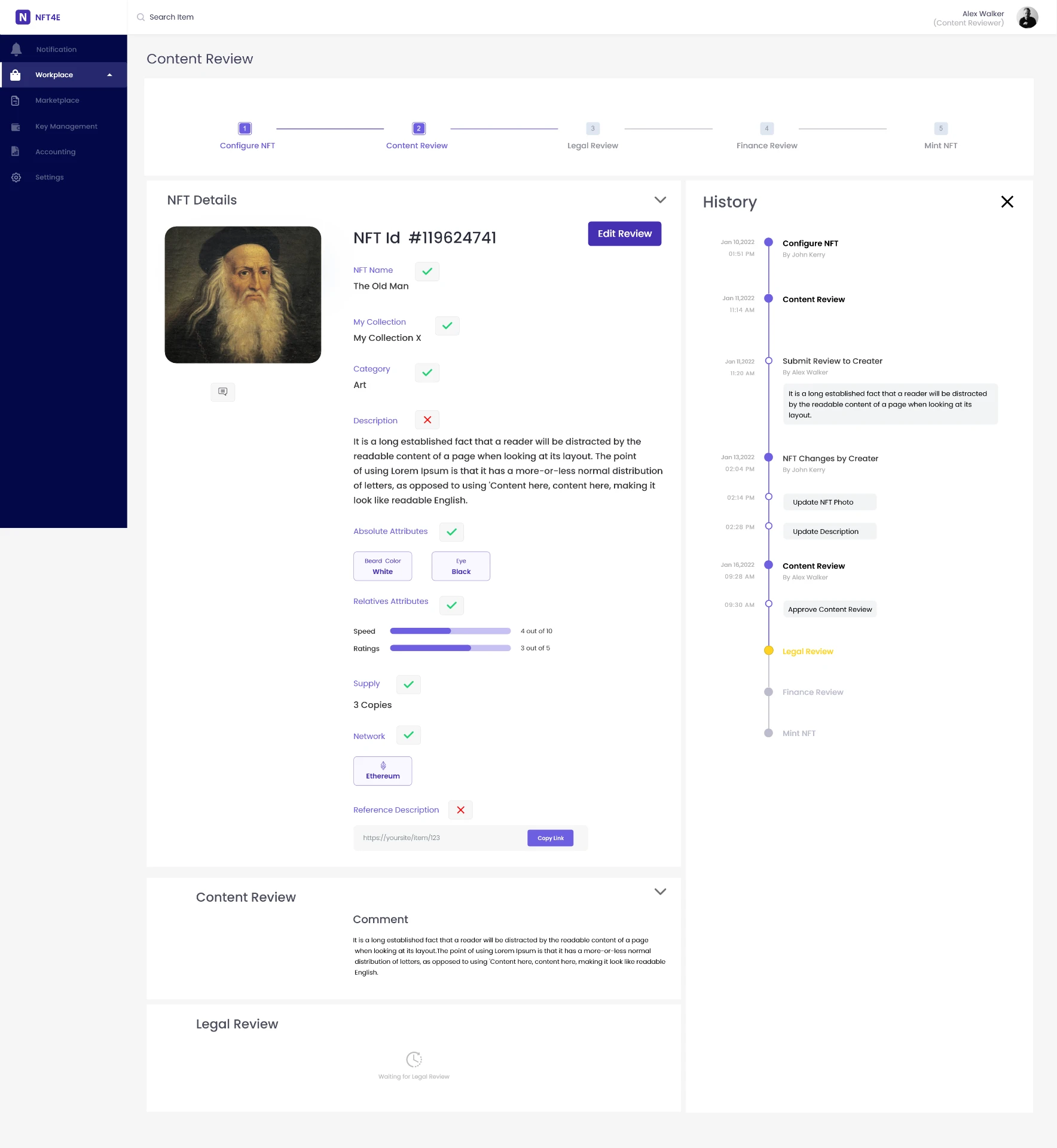
Configure NFT → Content Review → Legal Review → Finance Review → Mint, shown as a persistent numbered stepper. Nothing reaches the chain until all four upstream stages are signed off, and each stage can bounce the asset back with a comment.
Four distinct roles — Creator, Content Reviewer, Legal, Finance/Admin — share one record but need completely different views and permissions.
Reviewers mark each attribute individually — name, collection, category, description, attributes, supply, network, reference link — so a creator gets a precise fix list instead of a vague rejection.
Reviewers approve or reject individual fields (name, description, attributes, supply, network), not just the whole asset, which needed a per-field decision pattern that stays scannable.
A timeline rail records every action with actor and timestamp, including reviewer comments and creator edits, giving legal and finance an evidence chain long after the asset is minted.
The review loop is conversational: comments, creator edits, re-submissions. That history had to be legible months later for audit.
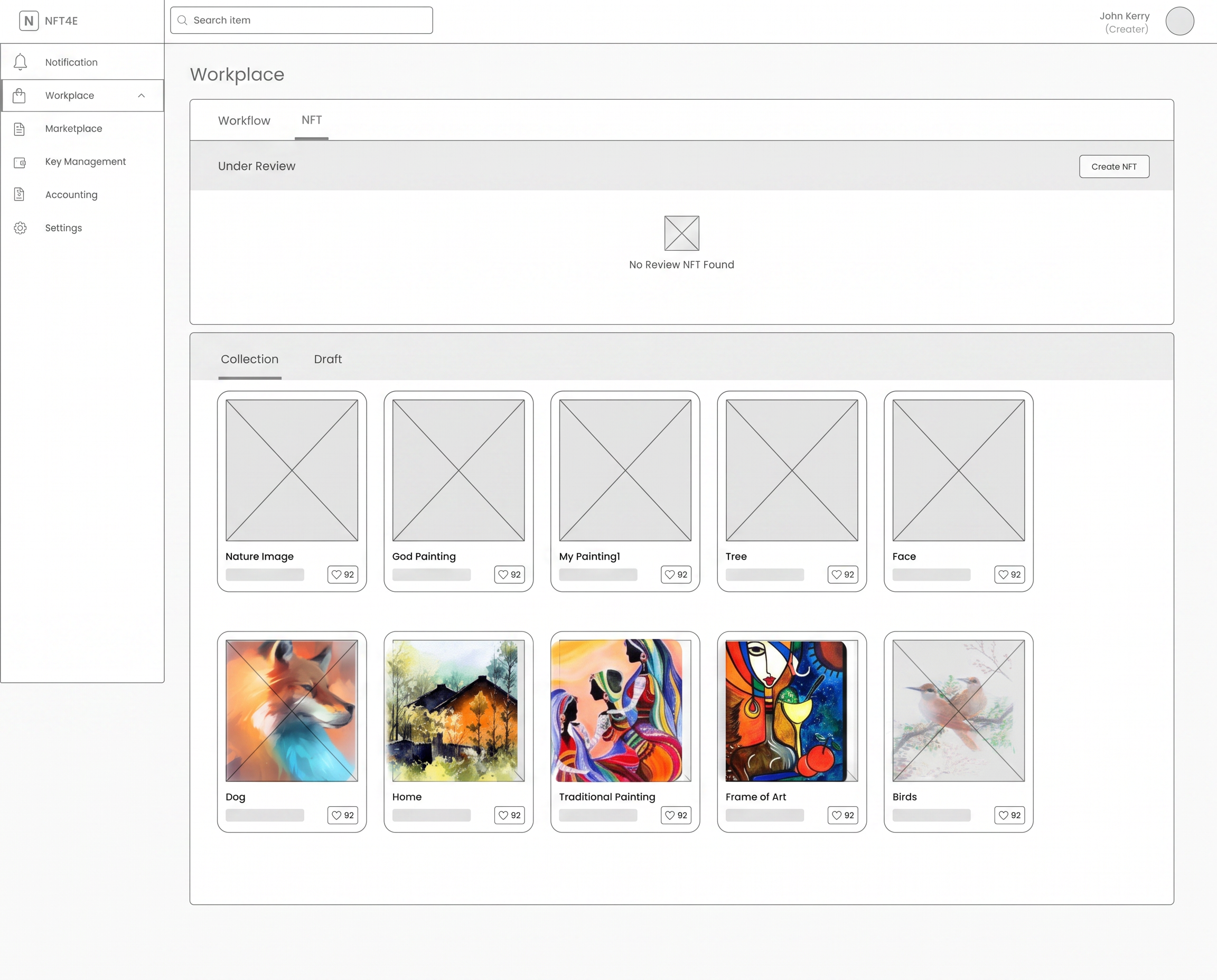
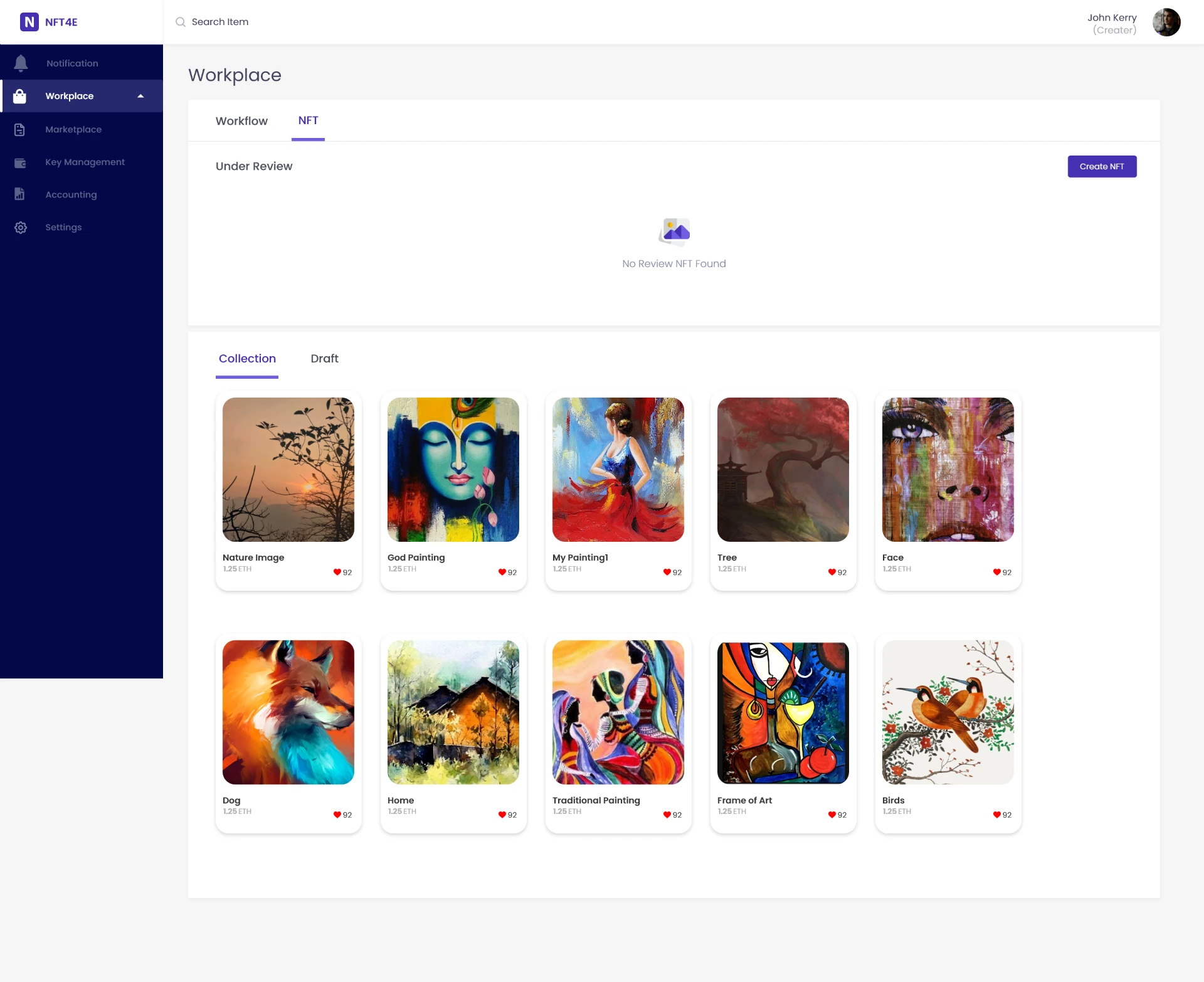
Creators see drafts, under-review and their collection; reviewers see queues and decisions; admins additionally get Metadata Management and workflow enable/disable controls. Same data, four different products.
The same platform hosts an internal governance tool and a lively marketplace — two very different visual tempos in one design language.
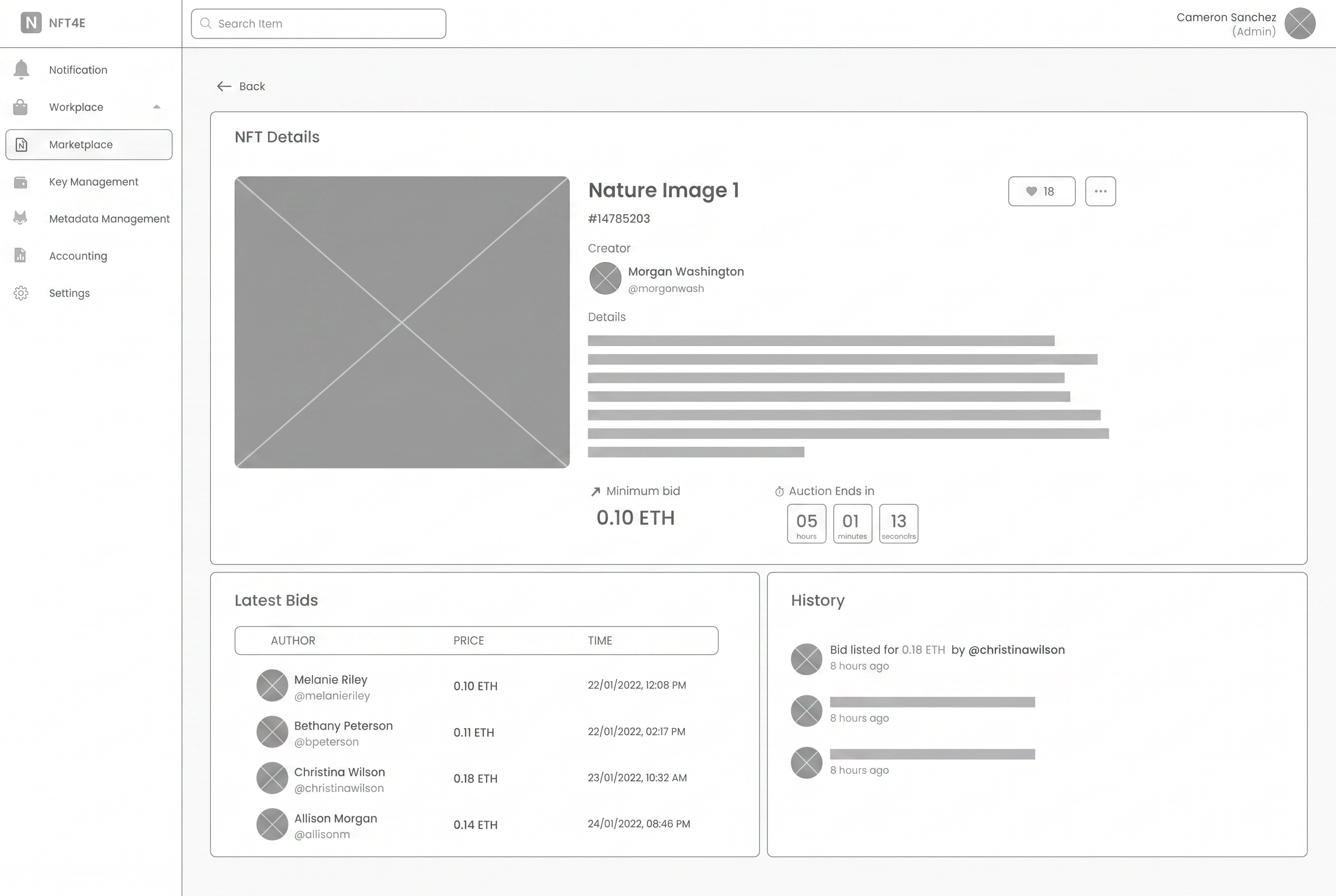
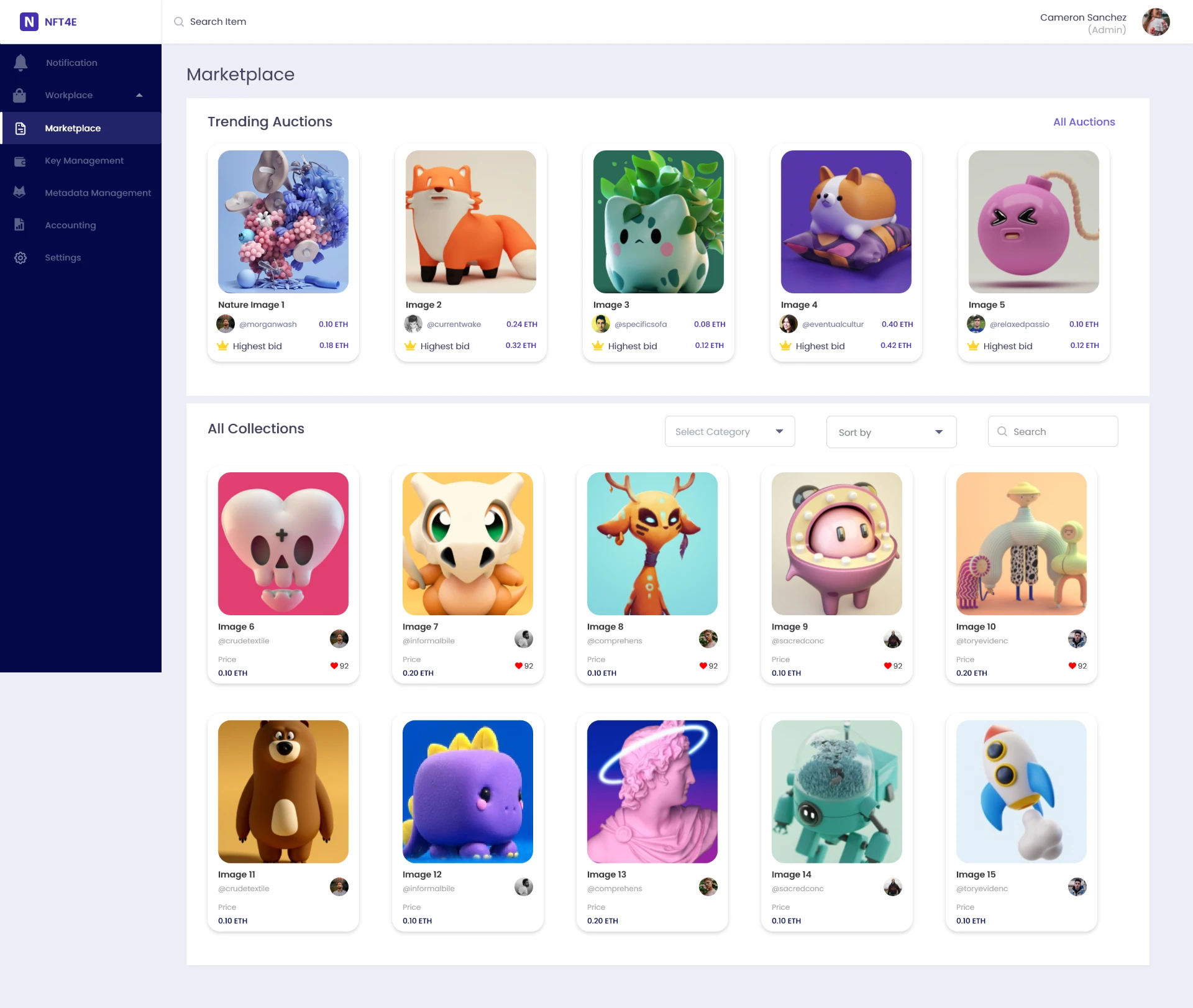
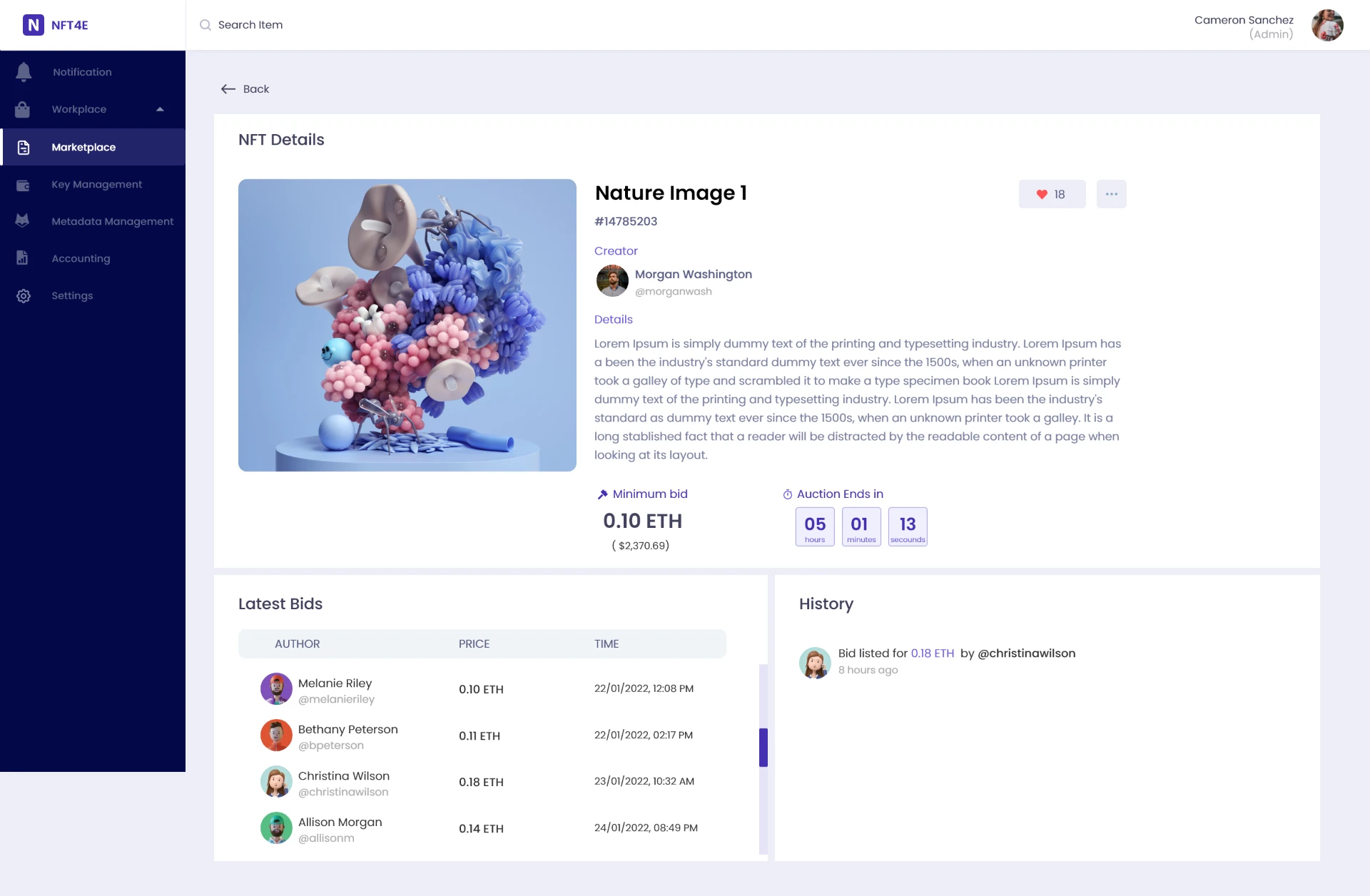
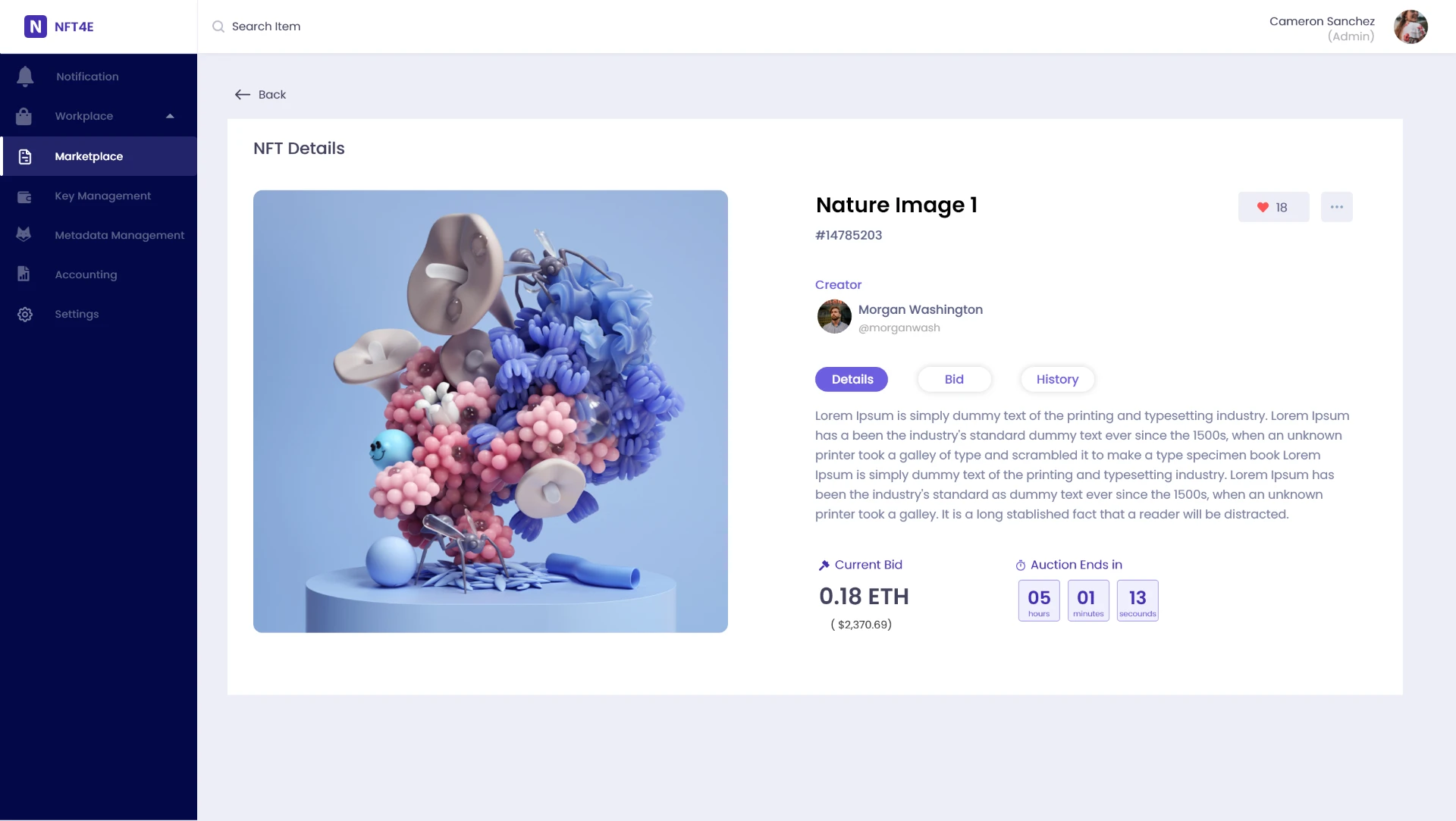
Trending auctions lead with artwork, creator handle, price and highest bid; item detail pairs the piece with creator provenance, a live countdown and a latest-bids table so the state of an auction is never ambiguous.
Web3 vocabulary (network, supply, key management, metadata) had to make sense to legal and finance staff who are not crypto-native.
Designed a role-based platform around a five-stage governance workflow — Configure NFT → Content Review → Legal Review → Finance Review → Mint — with field-level approve/reject, a full activity history, key and metadata management, and a marketplace for auctions, bids and collections.
05
Design process
01
Workflow architecture
Mapped the collectible lifecycle as a five-stage pipeline with explicit hand-offs and rejection paths. The stepper became the product's spine: it appears on every review screen so anyone can see where an asset is and who is holding it up.
02
Workspace IA
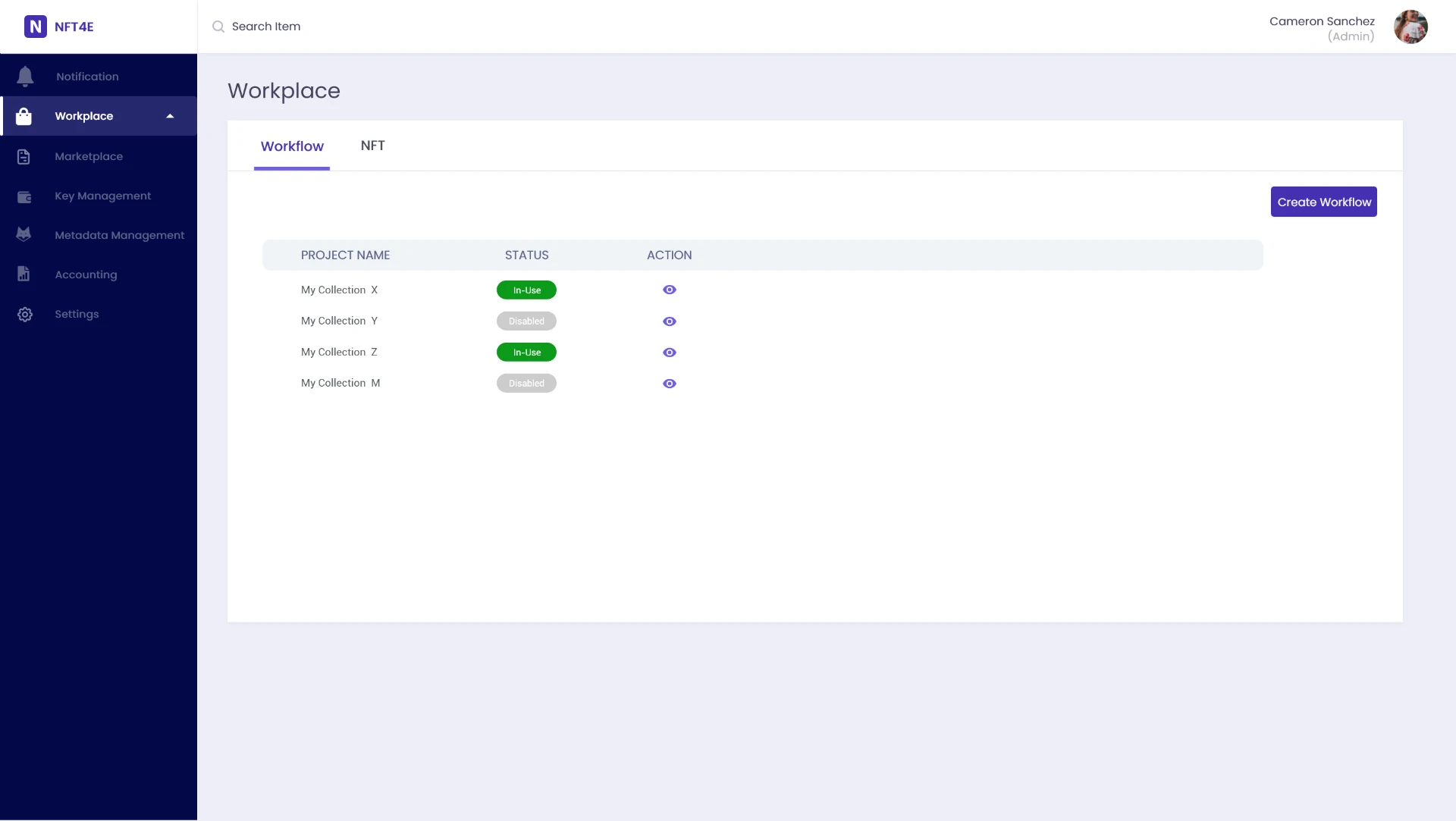
Split navigation into Workplace, Marketplace, Key Management, Metadata Management, Accounting and Settings, with Workplace itself tabbed into Workflow and NFT — so a creator's drafts, under-review items and published collection are three glances apart, not three journeys.
03
Field-level review pattern
Designed the review screen as a two-column read: NFT details on the left with a green tick or red cross beside every field, and a live History rail on the right timestamping each configure, comment, edit and approval.
04
Marketplace & auction UI
Designed trending auctions, filterable collections, item detail with creator provenance, minimum/current bid, a countdown timer, and a latest-bids table — using card density and imagery to make the marketplace feel alive next to the calm governance tooling.
06
Validation & handoff
Testing & handoff
Ran task tests on 'review and approve an NFT' and 'place a bid before the auction ends', tightened the reject-with-comment path, then handed off in Dev Mode with the full permission matrix, empty states and WCAG AA contrast documented.
07
Final UI / key screens
08
Outcome & reflection
Documented project outputs
- 5 stages — Governed mint pipeline
- 4 roles — Permission-shaped views
- 12 — User interviews
- Field-level — Review & audit trail
In Web3, most usability failures are trust failures wearing a UI costume. On an enterprise platform, trust isn't built with reassurance copy — it's built by showing who approved what, when, and what they said. The history rail turned out to be the feature that made teams comfortable minting at all.